A good magician always reveals his tricks!
With the release of my newest not-an-essay-about-video-games work of art, THE HIEROPHANT, I felt inclined to discuss a little more of my process for my “fans.” I think it’s important, in a way, to discuss where some of these more abstract things come from without explicitly explaining them away, leaving them to have a bit of mystique but perhaps adding another new layer of context to be met after the first listen. I think music is a very abstract thing, yes, and it can often feel very “spiritual,” but I found inspiration somewhere and I did have some specific things in mind when I created THE HIEROPHANT. It can be helpful to your interpretation of the music to try to put the 2 and 2 together of how I got from random crap A to finished song B.
As such, I’m not going to offer too many specific ruminations on how or why each sampled track or recording led to each sound. It’s often too difficult to put into words, even if I feel like I can. I simply want to present, for each track, a list of original pieces that I stripped for parts in order to make what you hear now. In a way, this is both an exercise in giving credit as much as it is a way of divulging my process as an artist. I haven’t always been so oriented toward using samples in my music, trying harder to cut things from whole cloth with wavetable synths and midi controllers. THE HIEROPHANT felt like something where taking specific, pseudo-recognizable things would be an advantage: hear something familiar, think of a familiar place, only try to imagine how it has changed with the modifications I’ve made to what you’re hearing. Of course, I am no stranger to the dreaded homage, and I often like to include melodies or riffs from other songs as little breakdowns or bridges in my own original works, mostly because I think it’s funny. But THE HIEROPHANT is a bit more pointed.
So, without further ado, here are the samples I used for THE HIEROPHANT. I will only include samples that are from existing songs or videos, not any like, drum sounds that came with synths or with my DAW. Because we all know where those came from already! If we like this kind of post, I will probably do it for my previous works as well, even though they have fewer samples in them.
TRACK 01: (WHAT’S LEFT OF) THE SNAKE DREAM
Track 01 feels like the most “direct” track, which might not read to some people considering how confusing the name is. I get that it makes no sense to anyone but me, which is why I think it’s fun! This song is made up of 4 tracks, 2 of which are processed samples of songs, 1 of which is an NOAA bathysphere recording, and 1 of which is the sound of TV static. Of all the songs, this one is probably the furthest from my original idea.
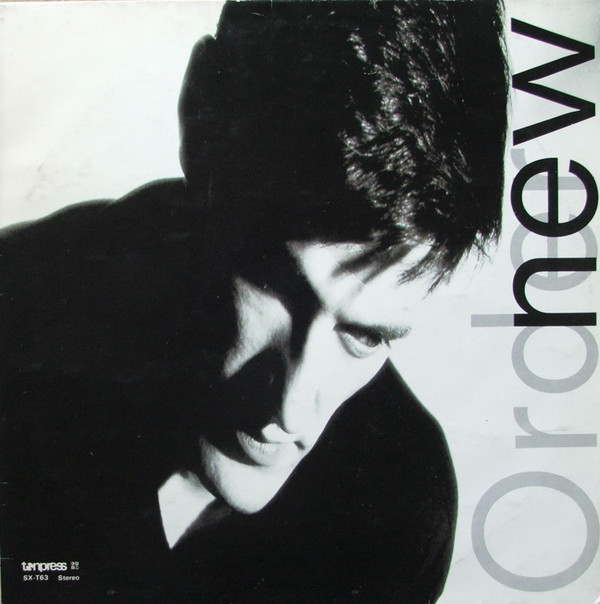
The Melody is cribbed from the intro to New Order’s “Sub-culture,” off of 1985’s Low-Life. New Order are probably the biggest single influence on my existing body of work. I’m going to restrain myself from beginning to write much more about them.
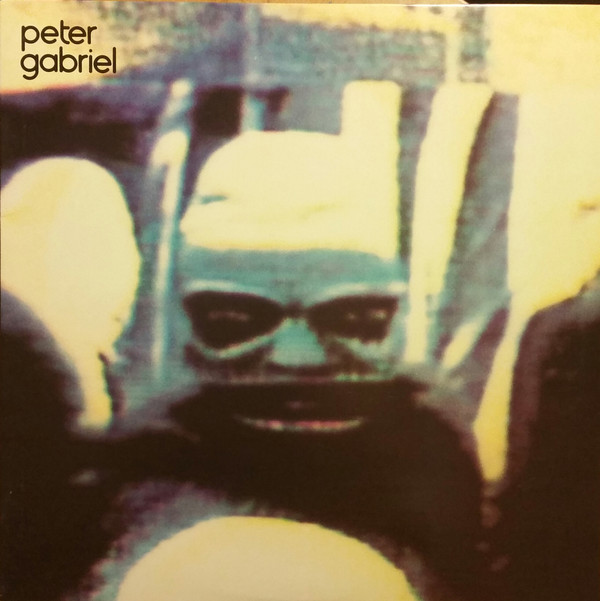
The low end–what you hear on the left channel–is the creepy woodwind intro to Peter Gabriel’s “The Family and the Fishing Net,” from 1982’s Security. Peter Gabriel is also a huge influence on me, like he is on basically everyone who’s ever written a song in the last 60 years. These songs are coincidentally from a similar time and place, but are essentially polar opposites.
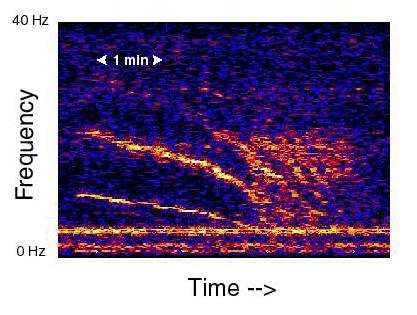
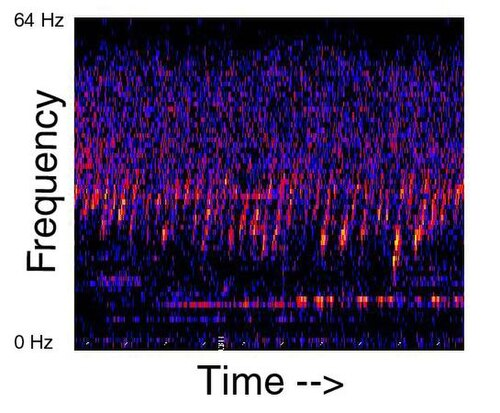
That drone in the background is an NOAA recording of what is believed to be undersea glacier movement, termed “The Slow Down.” This and many other undersea hydrophone recordings have been the subject of many years’ online urban legend tomfoolery, due to their uncertain and anomalous nature. No official explanation for the sound exists that can be proven, leading many to believe the rhythmic pulsing of the recording is somehow unnatural. At risk of giving away too much, my original conception for THE HIEROPHANT was to center entirely around these more obscure urban legends from the internet, but I scrapped that idea early on when I started to find it sort of annoying.
TRACK 02: A SUDDEN CLEARING
“A Sudden Clearing” was named by my brother, Matt, because of the effect it gives when you hear it. The saxophone sound fades away, and a clearing is opened of empty space, its intrigue heightened by bizarre piano. That is not the picture I had in my mind, but it’s so far the most vivid interpretation I’ve heard! This song is also made up of 4 tracks, but they’re kind of from all over the place. The bass sound you hear halfway through the song is a midi instrument I modified using SurgeXT (shouts out to them!)
The saxophone intro itself is perhaps the strangest sample of them all. It is not from a published song and I’m not sure the video even exists anymore, but it’s actually from an instagram reel. These two saxophonists (@nathanialpov and @brandenbrownmusic, they also have music on spotify,) who have this gimmick of playing free jazz compositions in storm drains and underpasses to make the sound resonate a certain way. I’m not sure how useful it is beyond formalism, but some of the isolated saxophone sounds they have developed are very provocative. The intro to this song came from the start of the first video of theirs I saw, which I can’t see on their profiles anymore…it may be on their spotify releases? Check them out for sure.
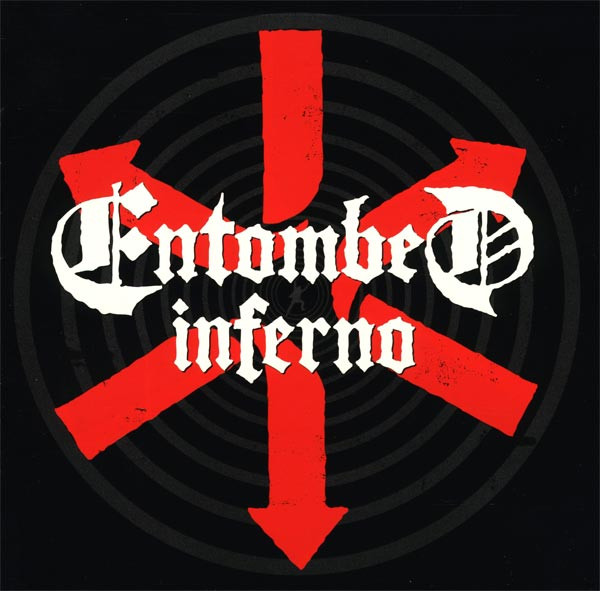
The piano component is probably the longest and least altered sample I used. I almost feel bad for leaving it so naked and visible, but it’s just a deeply underrated sound from an unlikely source that I have always loved. It’s the song “Intermission” by death metal band Entombed, specifically from their 2003 album Inferno. I’ll be honest: this is not a great Entombed album, and this song in particular is meant as a non-metal break between two longer tracks. It’s also a sort of re-recording of a similar track from the infinitely better To Ride, Shoot Straight and Speak the Truth years earlier called “dclxvi.” For some reason, this little 5-second snippet of the song has always stuck out to me, despite remembering little else from the shitty album around it.
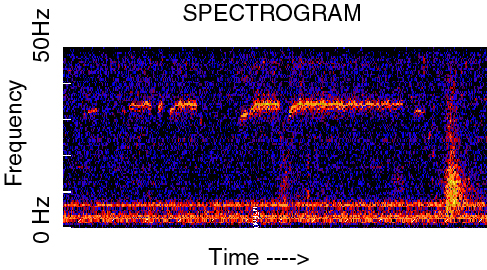
The whistling sound throughout the track is yet another hydrophone recording with mythical status, called “Train.” It is also believed to be a glacier scraping against the sea floor. But, when sped up, it sounds like a train whistle. Not sure what the paranormal part of that one is supposed to be, but I thought the raw recording was a sufficiently hollow, high-pitched sound to sit with.
TRACK 03: KIKIYAMA BEAT
This is the song with the most tracks by far, at a WHOPPING seven! All the drum sounds you hear were either built using default ableton samples, or a couple of cowbell hits from a Cheetah MD16 drum machine (I also used that for ALL OF THE TIME). The remaining 3 tracks are composed of that ringing in the background, the melody over the top, and that weird vocal sample. The last of which, the “vocals,” are actually a text-to-speech Mandarin Chinese sample I downloaded off of youtube ages ago for something else, then never used. Beats me what it’s saying.
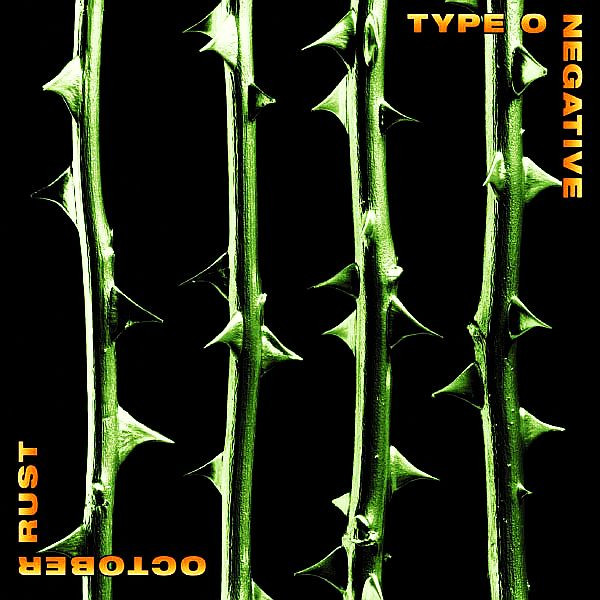
The background noise is actually the synth string sound from Type O Negative’s “Haunted,” off of October Rust in 1996. I performed some trickery with reversing, looping, and automating the intro so it sounded nice and constant. Type O is a deeply misunderstood band; I don’t consider nor have I ever considered myself a “goth,” but legendary drug-addict chud Peter Steele comes by his neurosis pretty honest. The construction of their longer songs is always very fascinating, and something about his personality as resentful and melancholic gave the music a certain quality that has yet to be properly replicated. Maybe to make good metal you have to actually hate women? Sort of a Faustian bargain.
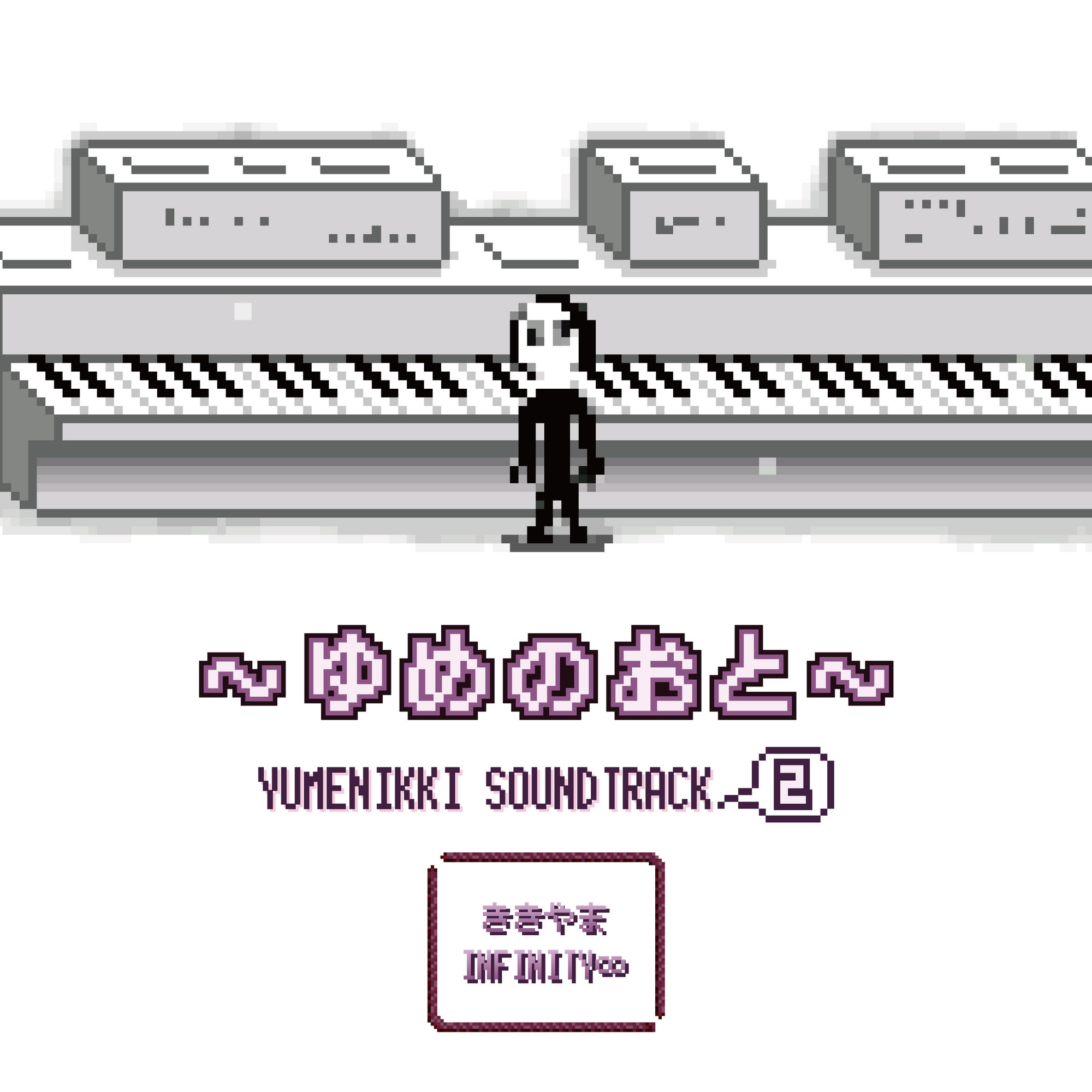
The melody is where the song gets its name from: I took it from Yume Nikki. If you’ve played the game, you might recognize that it’s the piano you hear when you go to Mars (I guess I’m assuming everyone who’s played Yume Nikki also has an eidetic memory of it,) but I remixed it, re-pitched it, and sped it up. The track from the game, retroactively titled “Kienai Kizuato” (I believe a reference to Kiyoshi Kurosawa?) is nothing but this looping piano arpeggio with some rain sound effects over the top, which I tried hard to suppress. Yume Nikki is a treasure trove of simple, effective songs all meant to conjure incredibly specific atmospheres within very short timeframes and small spaces. The soundtrack is a huge inspiration to me and always has been, and I resist quite frequently the urge to sample it more often. Every track is so short and evocative, to sample it at all is tantamount to plagiarism–this song’s gaudy trip hop construction may have been born from an attempt to recontextualize the sound as far from its original intent as possible.
TRACK 04: 1012
This song is another remnant of my original conception for an album centralizing internet urban legends. 1012 is named in reference to an old internet campfire tale about a sequence of radio signals that could overlap to cause the apocalypse. It’s a little more elegant than that, but in practice I wanted to make something out of bizarre, discomforting radio signals. I’m far from the only one to arrive at that.
This one is made of 4 tracks, 2 of which are samples from Soviet radio broadcasts. The left channel features UVB-76, the mythical military numbers station that has existed since the 80s. The station still exists today, but for the last 10 or 15 years has essentially been a stupid meme for Russian radio pirates to splice into with gopnik rap music. For a while, its cryptic nature and (still) unexplained purpose engendered a lot of theories about its potential as a trigger for a nuclear weapons system. It’s frightening to remember the speculative fiction around it from when I was a kid. The right channel is the much more well-known DUGA-1 radio array signal, infamous as “the Russian woodpecker” throughout the cold war. Before it was a known and declassified signal, many people who accidentally interrupted its signal (incredibly easy since the array is so huge and powerful,) came to believe all sorts of things about it. Mind control, psychic weaponry, things of that nature–in truth, it was simply a large, missile deterrence system meant to spot IRBMs and ICBMs from really far away. At this point, there are plenty of video games, articles, and movies explaining this stuff away. To me, it’s interesting how sans context, the sound of these signals can be very eerie.
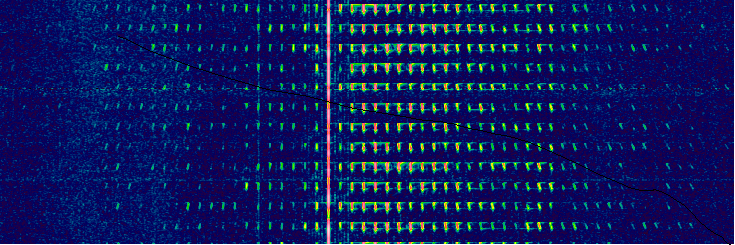
That was a long-winded explanation, but the other two tracks are much simpler. The windy sound you hear is yet another creepy sauce underwater microphone recording, this one known as “Upsweep.” This sound has existed for decades since it was first detected, and still occurs seasonally today, likely from underwater volcanoes. This one sounds extra weird when sped up, which makes it a little more confusing than some of the other infamous ocean sounds. The last track is just a synth MDE string sound I pitched way the hell down.
TRACK 05: LI’L CREEP
This track was originally called “Creepy Li’l Cave,” because that what it sounds like. I changed it because I didn’t want to lead anybody in any specific directions on first listen, but I don’t know. What else would it be? I think it’s sort of silly, one of a couple songs that are less bizarre and unnerving than others. A simple, eerie sound undercut by a stupid sound to make it seem more cute and boutique than it would be otherwise.
We’ve got 3 tracks here. One of them is the spacious hum that makes up the background, which is a simplified version of the microtonal chord I developed with MDE pads for MUSIC OF THE SPHERES. I removed some of the interference and then pitched it down to make a dull, heavy sound that bares down on you. The default cymbal sound toward the end is also its own track, meant as a shocking little break from what is otherwise a hypnotizing little ditty. Brechtian?
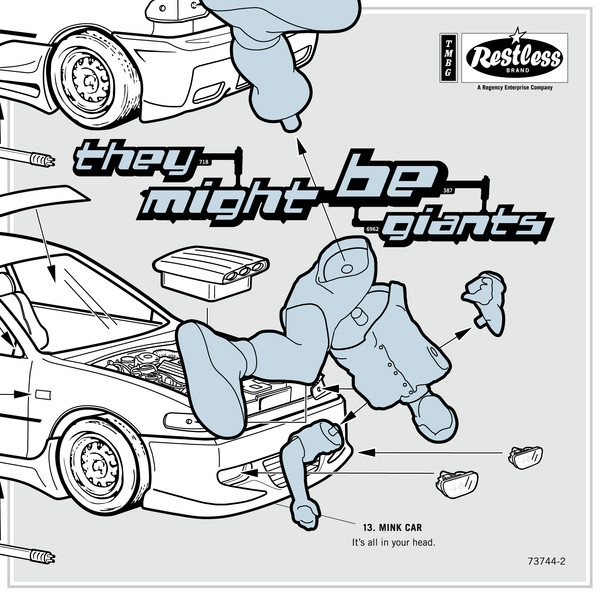
The melody you hear is, as some astute listeners might clock, taken from They Might Be Giants’ “Wicked Little Critta” from 2001’s Mink Car. This album is the second best thing to happen to the world on 9/11! I’ve always loved the percussion part of this song, it’s really funny to me, and I thought it would be nice to let it progress more slowly both to appreciate it more and to divorce it from its context as like, white trash Canadian culture critique. Or whatever that song is supposed to be.
TRACK 06: ALKALINE
This is a song that I came up with insanely late into the process of this album. It was originally going to be 6 songs, but I liked the droning sound of this song too much to not expand on it a little. It’s still a very simple, 3-track song that actually has no midi sounds in it at all. It is 3 samples put together to give the impression of something sort of industrial, but arrhythmic and dynamic. Making drone songs is another thing I try to suppress in myself sometimes, mostly because I spent years seeing people get made fun of online for that, and it stuck.
The drone you hear is 1 of two Swans samples, it being a heavily processed clip from “Surrogate Drone” from 1996’s Soundtracks for the Blind. This is an album that dominates a lot of discussion around Swans, but is far from being one of my favorites. Ironic how the process I have come to establish for myself is essentially a convergent evolution of the process used to develop Soundtracks for the Blind, yet I find it frequently losing me. What does that say about my own music? One of the songs that really grips me is “Surrogate Drone,” the endless and abstract final statement of the album. I clipped a section of it and created a simple, irregular melody out of it, for no other reason than finding it pleasing to alter the pitch and the frequency of an already completed whole chord. It felt like working with one of my own midi instruments I had built, only with less direct control.
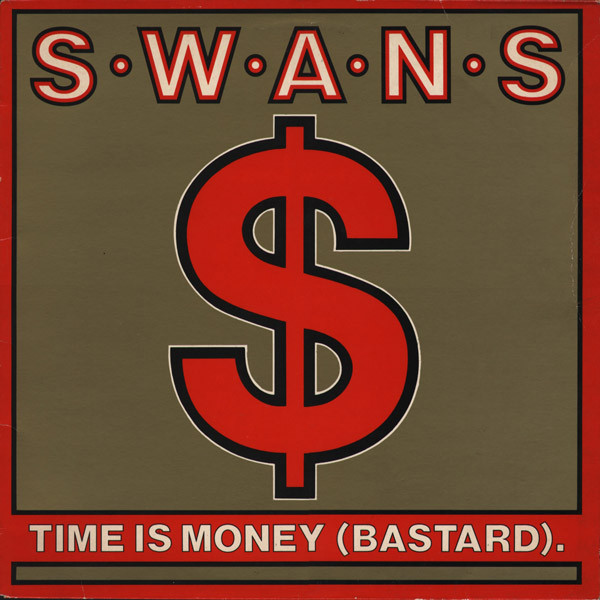
The second Swans sample is the high pitched grinding on the right channel, a sample of the intro to 1986’s “Time is Money (Bastard).” Fittingly, Gira developed the sound you hear in the song’s intro by sampling the discharge of a nail gun into a drum machine and looping it, making it sound like a very aggressive snare. I retrofitted this sound back into its original context, using it to mimic the sound of an actual high-frequency machine. It serves as the high end of an otherwise very deep, resonant song.
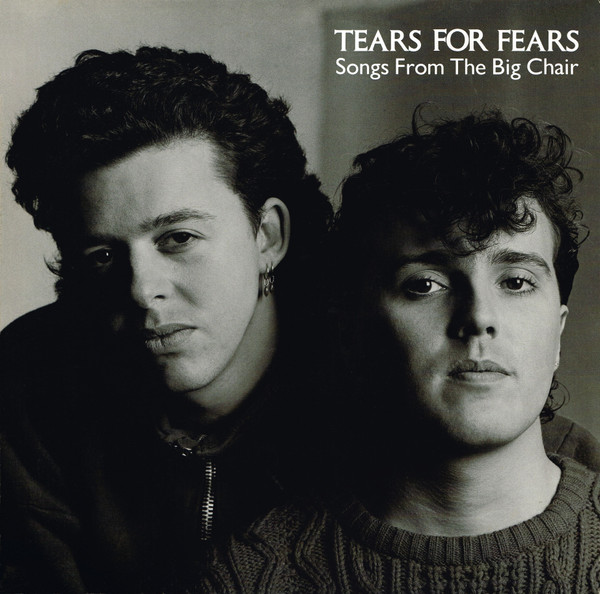
Now, Gira is a huge influence on me, and more or less the guy who inspired me to make my own music in the first place (we’re not gonna talk about him living in Israel,) but the third sample is yet another enormous influence on me: Tears for Fears. The bizarre hammering you hear is the surreal, constant drumbeat of their experimental demo “Empire Building” in the Songs From the Big Chair sessions around 1984/85. This is a song that hardly saw the light of day until the super deluxe release ages later, but Songs From the Big Chair itself is a huge deal for me. Outside the UK not everyone understands how big a deal Tears for Fears’ short run was, but it’s not exaggeration to say that this album is way ahead of its time, and many of the unorthodox recording and producing techniques that went into it sort of changed the whole game. This particular song is probably the most sinister and confusing of all the weird outtakes from the LP, and once the word “industrial” rolled through my head I somehow knew instantly that this little beat would be a suitable low end. It fit perfectly with the drone in my mind.
TRACK 07: KING OF THE VOID
Lastly, we have the simplest song, but in my mind the most effective. This is the kind of sensation I most wanted to capture. It feels completely empty to me, like being dead. Or maybe even beyond dead, like purgatory or something. Just nothingness. Comforting!
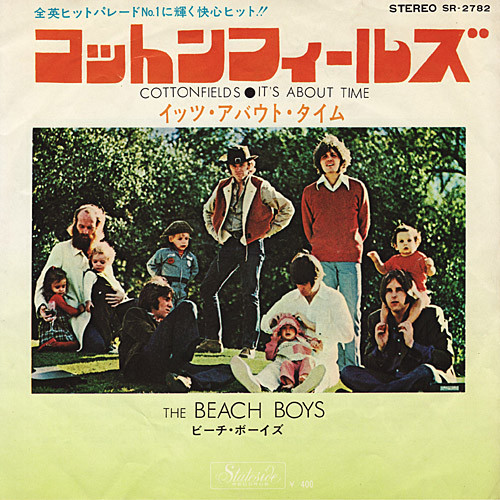
I made this by adding a ton of effects and EQs to a single sample, which is from “The Place” on the Earthbound soundtrack. Sort of funny that my mind went here, considering that song itself is also made up of a single, repeatedly processed sample. For those who don’t know, much of the Earthbound soundtrack is made up of bizarre, eclectic samples taken from all over music from the mid-20th century, mostly from The Beatles but from plenty of other sources too. This infamous sound from outside Giygas’ lair is actually an insanely crushed and distorted sample of the intro to “Deirdre” by The Beach Boys from 1970. Part of Earthbound’s legacy is how it approaches recognizable things and packages them in new, absurd contexts–the music is the exact same way, and this particular example of sampling has always been an inspiration to me. That and the random “All You Need is Love” sample in “The Cliff that Time Forgot” (curiously, both that and “The Place” pertain to the same in-game location at different times,) stand out to me, and are always on my mind. How a short snippet of an innocent, beloved pop song could be fed through so many wringers over so many years into a new, horrific sound is an interesting lineage to follow. I’m glad to be a part of it!
 Triumph In Blog
Leave a comment